Virtual reality experiences intersect perception, presence, and motivation. This view emphasizes empirical, user-centered methods across disciplines to map how sensory fidelity, cognitive load, and task goals shape engagement. By examining interfaces, feedback, autonomy, and ethics, researchers seek balanced challenges that sustain attention without harm. The result is a framework that invites careful testing and transparent governance, hinting at how design choices influence well-being and meaningful interaction inside immersive spaces, while leaving questions to be addressed.
How Virtual Reality 101 Shapes Your Perception
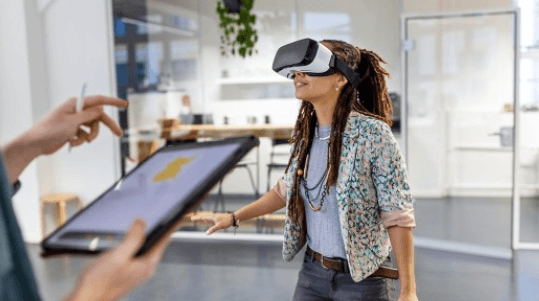
Virtual Reality 101 introduces users to immersive environments that rely on multisensory cues to simulate real-world perception.
The study of immersive perception in VR emphasizes user-centered measurements, systematic observation, and interdisciplinary methods.
Cognitive entrainment emerges as a mechanism aligning attention and perception with design features, while users explore agency, freedom, and adaptability within structured interfaces that support informed, autonomous experiences without overreliance on external cues.
What Drives Presence in Immersive Experiences
Presence in immersive experiences emerges from the interaction of sensory fidelity, cognitive engagement, and contextual relevance, as users integrate multimodal cues with task goals and prior knowledge.
This study highlights immersion causality by linking perceptual realism with expectancy and agency, while sensory conditioning shapes automatic responses.
Researchers emphasize user-centered methods, cross-disciplinary data, and iterative designs to clarify mechanisms and support meaningful, freedom-friendly VR experiences.
Why Engagement and Flow Happen in VR
Engagement and flow in VR arise from the alignment of task structure, user goals, and perceptual affordances across sensory, cognitive, and affective channels. This study notes immersive motivation emerges when feedback, challenge, and autonomy are balanced, supporting sustained attention. Design psychology highlights iterative, user-centered evaluation, cross-disciplinary insights, and practical guidelines for accessible, meaningful experiences that respect individual freedom and diverse capabilities.
Ethical Design: Balancing Benefit, Belief, and Boundaries
Ethical design in VR requires a careful balancing of anticipated benefits, user beliefs, and the boundaries that safeguard autonomy and well-being. Studies trace how design choices shape perceived agency, trust, and safety across diverse users.
The ethics of consent and bias mitigation emerge as core mechanisms, guiding transparent disclosure, inclusive interaction, and ongoing accountability within interdisciplinary, user-centered research and practice.
Freedom-friendly governance persists.
Frequently Asked Questions
How Does VR Affect Long-Term Memory Consolidation?
VR memory undergoes nuanced consolidation effects, with neural replay and VR sleep integration contributing to selective stabilization while experiential vividness may modulate encoding depth; interdisciplinary findings suggest user-centered benefits for memory domains but variability remains.
Can VR Cravings Lead to Real-World Behavioral Changes?
VR cravings can influence real world behavior, though effects vary by individual and context; empirical evidence supports moderation and mindfulness strategies. Theories of transfer and cue-reactivity help explain mechanisms, highlighting interdisciplinary insights from psychology, neuroscience, and human-computer interaction for user-centered freedom.
Do Individual Differences Predict VR Motion Sickness Susceptibility?
Individual differences partially predict motion sickness susceptibility in VR, though effects are nuanced. An interdisciplinary, user-centered approach suggests personalized assessments and adaptive pacing reduce discomfort, enabling freer exploration while maintaining empirical rigor and transferability across experiences.
What Role Does VR Play in Social Anxiety Treatment?
Breaks the ice, virtual exposure can reduce social anxiety by gradually building confidence; VR supports real-time feedback and social skills practice, enabling personalized, interdisciplinary interventions that center user autonomy while evaluating outcomes in empirical, user-friendly contexts.
How Sustainable Are VR Habits for Mental Well-Being?
Mindful engagement enhances sustainable VR use by balancing immersion with reflection, supporting habit formation that aligns with well-being. Interdisciplinary observations suggest user-centered strategies promote lasting mental health benefits, while maintaining autonomy and freedom within mindful, purposeful VR routines.
See also: blooginga
Conclusion
In this empirical arc, VR emerges as a calibrated stage where perception meets intention. From user-centered metrics to interdisciplinary lenses, presence and flow are nurtured by balanced feedback, meaningful goals, and ethical guardrails. Detaching from bias, the viewer observes how autonomy and safety co-create motivation, guiding behavior without coercion. The conclusion: immersive truth lies not in spectacle alone, but in rigorously designed experiences that honor well‑being, individuality, and the science of experience.