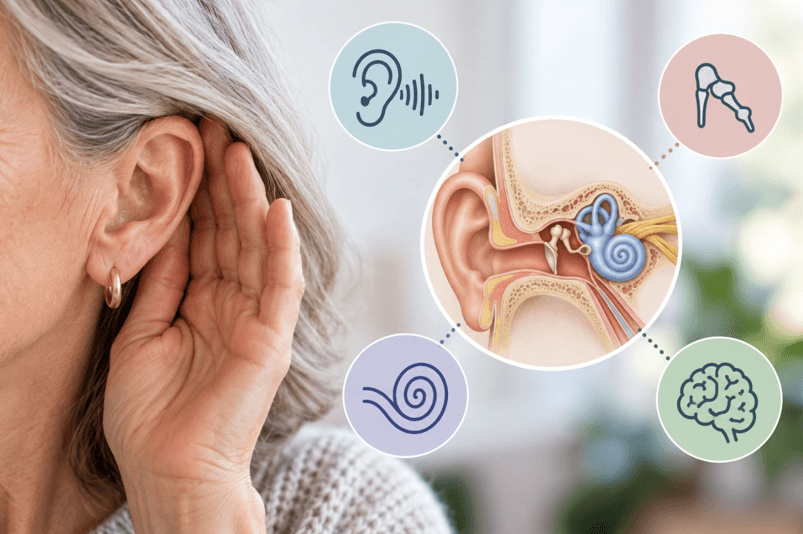
Hearing loss isn’t a single condition. Age-related decline and the ringing that follows a loud concert are different problems, even though the symptoms can feel similar. There are several distinct types of hearing loss, and identifying the correct one determines what treatment will actually work.
Once the type is known, the next question is usually what to do about it. For many people, that means hearing aids, and pricing varies more than most expect. Anyone comparing options will notice ric hearing aid price listings shift depending on features such as Bluetooth connectivity or rechargeable batteries. Before getting into cost, though, it helps to understand what’s actually happening with your hearing.
Sensorineural Hearing Loss
This is the most common type. The tiny hair cells inside the cochlea become damaged. Sometimes the auditory nerve itself stops carrying sound signals to the brain properly. Either way, the damage doesn’t reverse. Hair cells don’t regenerate, so this type of hearing loss is usually permanent.
Age is the most frequent cause. Doctors call it presbycusis. Noise exposure, certain medications, and genetics can also play a part, and some people are simply more genetically susceptible to hair cell damage than others. People with this type often describe sound as muffled, even when the volume seems fine. High-pitched sounds tend to disappear first, birdsong or children’s voices, for instance, and conversations in noisy rooms become harder to follow.
Hearing aids generally work well here. They amplify sound and help make up for what the damaged hair cells can no longer do. Modern devices can also filter out background noise, which makes a real difference in group settings or restaurants.
Conductive Hearing Loss
This type of hearing loss works differently. Something physically prevents sound from passing through the outer or middle ear, rather than damage occurring inside it. It’s often temporary, and in many cases, treatable.
Earwax buildup causes a surprising number of cases. So does fluid from an ear infection. Other causes are more structural: a perforated eardrum, otosclerosis (irregular bone growth in the middle ear), or occasionally a tumor. Children get this a lot, usually linked to ear infections, and it tends to clear up once the underlying problem is treated. Adults can develop it too, particularly after colds, sinus infections, or changes in air pressure during flights.
Sound often feels blocked or turned down rather than distorted. Treatment depends on the cause. It might mean professional earwax removal. It might mean medication, or a minor procedure.
Mixed Hearing Loss
Mixed hearing loss is sensorineural and conductive loss happening together. That makes it more complicated to treat, since two separate problems need attention instead of one.
Doctors usually address the conductive part first, since it’s often the more fixable piece. Clearing an infection or removing a blockage are typical first steps. Once that’s resolved, they reassess how much sensorineural loss remains and whether hearing aids are needed for what’s left. This staged approach means treatment can take longer than for either type alone, so patience matters.
Auditory Neuropathy Spectrum Disorder
This is less common, and it behaves differently. With auditory neuropathy spectrum disorder (ANSD), sound reaches the ear normally. The problem is in how that signal travels from the inner ear to the brain. It’s closer to a wiring fault than damage to the ear itself.
Inconsistency is the clearest sign. Someone might hear clearly one moment and lose the thread of a conversation the next, especially with background noise. ANSD can affect people of any age, including newborns, and is sometimes linked to premature birth, jaundice, or genetic factors. Treatment depends on severity and might include hearing aids, cochlear implants, or assistive listening devices.
Sudden Sensorineural Hearing Loss
Sudden sensorineural hearing loss, or SSHL, gets its own section because it’s a medical emergency. Hearing loss happens fast, often within 72 hours, and usually in one ear only. The cause isn’t always clear. Viral infections, autoimmune conditions, and circulatory problems are common suspects.
Anyone experiencing this should see a doctor right away rather than waiting to see if it improves on its own. Corticosteroids and other treatments tend to work better the sooner they start, and delaying care by even a few days can affect the odds of recovery.
See also: What Businesses Should Know Before Relocating a Manufacturing Facility
Why an Accurate Diagnosis Matters
Hearing loss responds differently depending on the type, so getting an accurate diagnosis matters more than people realize. An audiologist can pinpoint the type and severity through a series of tests, some of which take less than an hour. That single assessment determines a lot: whether hearing aids will help, whether medical treatment comes first, or both.
For those who need hearing aids, the choices have grown. Basic amplification devices still exist, but so do models with rechargeable batteries and advanced smart features built in. Whatever type of hearing loss is involved, it shouldn’t be ignored. Catching it early tends to lead to better outcomes, no matter which kind it turns out to be.