Excess moisture can create problems across construction sites, industrial facilities, storage areas, restoration projects, and other commercial environments. High humidity can slow drying, affect materials, encourage condensation, and make it harder to maintain controlled working conditions. Permanent moisture control systems are not always practical when the requirement is temporary or tied to a specific project. Commercial dehumidifier rental can provide access to suitable drying equipment without requiring a business to purchase and store units permanently.
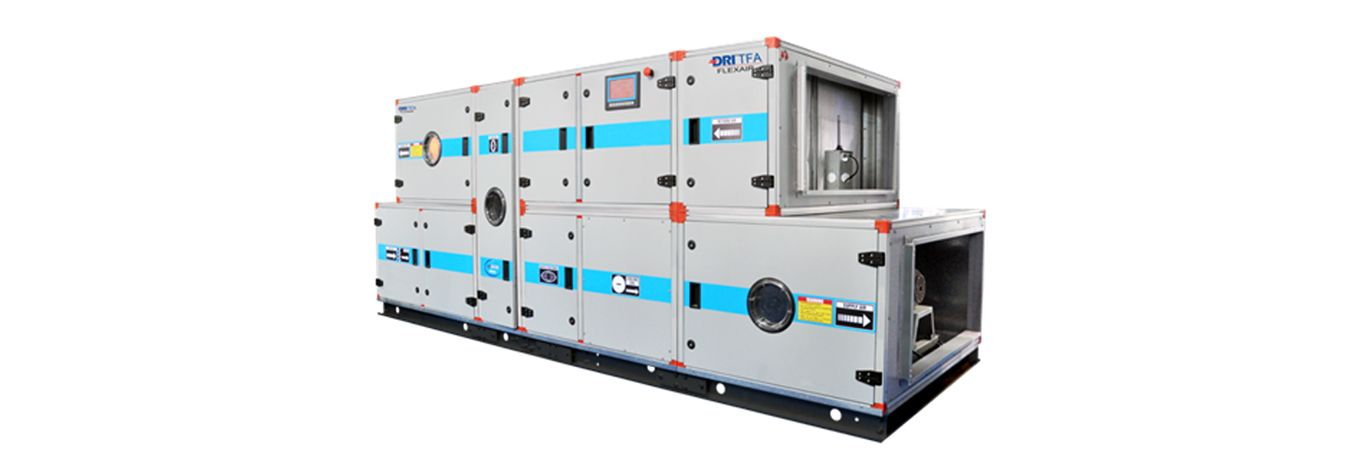
Commercial and industrial dehumidifiers are designed to remove moisture from the air and help establish more controlled environmental conditions. The appropriate equipment depends on factors such as the size of the space, moisture load, temperature, desired humidity level, and duration of the project. Rental arrangements can therefore be useful when businesses need additional capacity for a defined period. Understanding how these systems work and where they can be used helps facility managers and project teams make better equipment decisions.
What Is Commercial Dehumidifier Rental?
Commercial dehumidifier rental involves hiring professional dehumidification equipment for a specified project or operating period. Instead of purchasing equipment that may only be needed occasionally, businesses can arrange access to machines suitable for their current moisture control requirements. Rental equipment can range from portable units to larger industrial systems designed for demanding environments.
The main objective is to remove excess moisture from the air and help maintain a target humidity range. Equipment selection should be based on the actual conditions rather than simply choosing the largest available unit. Factors such as room volume, temperature, moisture sources, airflow, and drying objectives can all affect performance.
Businesses may consider rental equipment when:
- A project requires temporary moisture control
- Existing equipment does not provide sufficient capacity
- Additional drying capacity is needed during a busy period
- A facility is dealing with unexpected moisture
- Equipment is required for a construction or restoration project
- Purchasing permanent equipment would not be practical
A properly planned rental can provide additional dehumidification services while keeping the equipment requirement aligned with the project’s duration.
Why Moisture Control Matters in Commercial Environments
Humidity affects more than just comfort. Excess moisture can influence building materials, equipment, stored products, coatings, and drying processes. Condensation can also occur when moist air contacts surfaces that are below the air’s dew point. Managing these conditions can help reduce moisture-related risks and support controlled project environments.
Construction and maintenance activities often involve materials that need appropriate drying conditions before subsequent work can proceed. Paints, coatings, adhesives, flooring materials, concrete, and other components can be affected by environmental conditions. Excess humidity may extend drying periods or interfere with planned work sequences.
In industrial settings, moisture control may also support:
- Material preservation
- Controlled drying processes
- Reduced condensation
- Protection of sensitive equipment
- Improved working conditions
- More predictable project scheduling
The exact humidity requirement depends on the application. There is no single humidity setting that applies to every commercial or industrial project.
How Commercial Dehumidifiers Work
Commercial dehumidifiers remove water vapor from the air through a controlled drying process. The technology used depends on the type of equipment. Refrigerant dehumidifiers generally cool air below its dew point so moisture condenses and can be collected or drained. Desiccant dehumidifiers use moisture-absorbing material to remove water vapor and can be particularly useful in lower-temperature environments or applications requiring lower humidity levels.
The choice between technologies depends on the project conditions. Temperature, humidity, required dew point, airflow, and the amount of moisture entering the space all influence equipment selection. Industrial projects may require equipment capable of operating continuously under demanding conditions.
Before selecting a unit, project teams should consider:
- Space size: Determine the volume of the area requiring moisture control.
- Moisture load: Identify where water vapor is entering the environment.
- Temperature: Consider the operating temperature because equipment performance can vary.
- Target humidity: Establish the required relative humidity or drying objective.
- Air movement: Assess whether sufficient airflow is available throughout the space.
- Drainage: Plan how extracted water will be removed from the equipment.
- Operating period: Estimate how long the equipment will be required.
These factors help determine whether a portable commercial unit or a larger industrial system is appropriate.
When Should Businesses Consider Dehumidifier Rental?
Rental can be particularly useful when moisture control is connected to a temporary requirement. Purchasing equipment may involve capital expenditure, storage requirements, maintenance, and long-term ownership responsibilities. Rental allows businesses to access equipment for the period in which it is actually needed.
Temporary requirements can occur during construction, refurbishment, restoration, shutdowns, maintenance activities, and industrial drying projects. Additional equipment may also be required when the capacity of an existing system is insufficient for a particular project.
Common situations that may justify rental include:
- Building construction and refurbishment
- Water damage restoration
- Concrete and building material drying
- Industrial maintenance projects
- Temporary storage protection
- Coating and surface preparation
- Equipment drying
- Controlled manufacturing environments
The duration of rental can be matched to the project’s requirements. This can make the approach practical for businesses that do not have a continuous need for dedicated dehumidification equipment.
Commercial Dehumidifier Hire for Construction and Restoration
Construction environments can generate significant amounts of moisture. Concrete, plaster, flooring materials, coatings, and other building components may release moisture as they dry. Weather conditions and enclosed spaces can add further humidity to the environment. Dehumidification can help create more controlled drying conditions when naturally occurring evaporation is insufficient.
Restoration work can present a different moisture challenge. Water intrusion can leave building materials with elevated moisture levels even after visible water has been removed. Controlled drying may then be required to reduce remaining moisture and prepare affected areas for subsequent restoration activities.
A suitable dehumidification plan considers both the equipment and the environment. Simply placing a machine in a space may not produce the required results if air movement, moisture sources, temperature, and drainage have not been addressed.
Industrial Moisture Control Applications
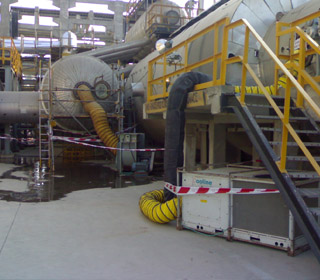
Industrial facilities may require humidity control for processes involving materials, equipment, coatings, or controlled environments. Moisture can affect surfaces and materials in ways that interfere with production or maintenance activities. Industrial dehumidifiers can provide additional drying capacity where environmental conditions need to be controlled for a defined period.
Certain industries also require specialized drying services. For example, pipeline drying is an important activity in oil and gas operations where moisture needs to be managed within pipeline systems. The drying approach and equipment required depend on pipeline characteristics, project specifications, and the required dryness level.
Other industrial applications may include:
- Manufacturing and processing areas
- Equipment maintenance
- Storage facilities
- Warehouses
- Surface preparation
- Coating and painting environments
- Industrial shutdown projects
- Temporary production areas
The specific equipment and drying method should always be selected according to the technical requirements of the project.
Factors to Consider Before Renting a Dehumidifier
Choosing a commercial unit requires more than calculating the size of the room. Moisture production and environmental conditions can vary significantly between projects. A large open space with a relatively low moisture load may require different equipment from a smaller enclosed area with continuous moisture generation.
Project teams should provide as much information as possible when discussing rental requirements. This may include floor area, ceiling height, temperature range, current humidity, moisture source, required humidity level, access conditions, power availability, and expected rental duration.
Important considerations include:
- Required moisture removal capacity
- Operating temperature
- Desired humidity level
- Available electrical supply
- Drainage arrangements
- Equipment placement
- Air circulation
- Rental duration
- Monitoring requirements
- Site access and operating conditions
Providing accurate information helps the equipment provider recommend an appropriate configuration rather than relying on general assumptions.
Rental vs. Purchasing Dehumidification Equipment
The decision to rent or purchase depends largely on how frequently the equipment is required. Businesses with continuous, predictable dehumidification needs may consider permanent equipment as part of their facility infrastructure. However, project-based requirements can make rental a more flexible alternative.
Rental can reduce the need for long-term storage and may allow access to different equipment configurations as project requirements change. It can also help businesses obtain additional capacity without permanently expanding their equipment inventory.
Purchasing may make more sense when:
- Dehumidification is required throughout the year
- Equipment utilization is consistently high
- A facility has dedicated space for the system
- Long-term operating requirements are predictable
Rental may be more appropriate when:
- The requirement is temporary
- A project has a defined completion date
- Additional capacity is needed for a short period
- Equipment requirements vary between projects
- A business does not want long-term equipment ownership
A project-specific assessment can help determine which option is more practical.
How to Get Better Results From Temporary Dehumidification
Equipment selection is only one part of an effective moisture control plan. The environment itself should also be assessed to identify ongoing moisture sources. Open doors, ventilation, leaks, wet materials, and outdoor air infiltration can continuously introduce moisture into a controlled space.
Air movement is another important consideration. Dehumidification works more effectively when moist air can circulate through the treatment area. Strategic equipment placement and suitable airflow can help distribute drying capacity more evenly.
Businesses can support effective operation by:
- Identifying and controlling moisture sources
- Keeping doors and openings managed where practical
- Maintaining appropriate air circulation
- Providing suitable drainage
- Monitoring temperature and humidity
- Checking equipment operation regularly
- Adjusting equipment capacity when conditions change
Monitoring is particularly useful for longer projects because environmental conditions may change as materials dry or weather conditions shift.
Why Professional Equipment Selection Matters
Commercial moisture control can involve conditions that differ significantly from residential applications. Industrial projects may require high-capacity equipment, specialized drying technology, continuous operation, or integration with other environmental controls. Selecting equipment without considering these factors can result in insufficient drying or unnecessary operating costs.
A professional assessment can help identify the equipment type, capacity, configuration, and number of units needed. It can also account for site limitations such as electrical supply, drainage, access, temperature, and airflow. This is especially relevant when the project has a defined humidity target or strict drying schedule.
Professional guidance can therefore help businesses avoid treating dehumidification as simply a matter of placing a machine inside a room. Effective moisture management depends on understanding the relationship between the equipment, the environment, and the source of moisture.
Commercial Dehumidifier Rental for Project-Based Needs
Commercial dehumidification can support a wide range of temporary moisture control requirements. From construction and restoration to industrial maintenance and specialized drying, the appropriate equipment can help create more controlled environmental conditions. Rental provides businesses with access to commercial and industrial equipment without requiring permanent ownership when the requirement is project-specific.
The right solution depends on the moisture load, space, temperature, target humidity, drying objective, and duration of the project. Equipment should be selected according to these factors rather than based solely on the physical size of the area. Monitoring conditions throughout the project can also help determine whether the selected equipment continues to meet the drying requirement.
Businesses that need temporary or project-specific moisture control can discuss their requirements with a professional provider. For equipment planning and commercial drying requirements, contact Technical Drying Services to discuss the conditions and requirements of your project.
Conclusion
Excess moisture can affect construction materials, industrial processes, storage conditions, coatings, equipment, and restoration work. Commercial dehumidifier rental provides businesses with access to professional moisture control equipment when the requirement is temporary or project-specific. The most suitable system depends on factors such as moisture load, temperature, space, airflow, target humidity, and project duration.
Effective dehumidification requires more than selecting a machine based on room size. Identifying moisture sources, maintaining suitable airflow, arranging drainage, and monitoring environmental conditions can all contribute to better results. With appropriate equipment selection and planning, temporary dehumidification can provide a practical way to manage moisture during commercial and industrial projects.
Frequently Asked Questions
1. What is commercial dehumidifier rental?
Commercial dehumidifier rental allows businesses to hire professional dehumidification equipment for a specific period. It can be used for construction, restoration, industrial drying, storage, maintenance, and other temporary moisture control requirements.
2. When should I rent a commercial dehumidifier?
Rental may be suitable when moisture control is required for a temporary project, when existing equipment lacks sufficient capacity, or when purchasing permanent equipment is not practical. The duration and equipment type can be matched to the project requirements.
3. What is the difference between commercial and industrial dehumidifiers?
Commercial and industrial dehumidifiers are designed for larger or more demanding applications than typical residential equipment. Industrial systems may offer higher moisture removal capacity, greater airflow, specialized drying technology, or the ability to operate under challenging environmental conditions.
4. How do I choose the right commercial dehumidifier?
Equipment selection depends on factors such as space size, moisture load, temperature, target humidity, airflow, drainage, power availability, and rental duration. A professional assessment can help determine the appropriate equipment configuration.
5. Can dehumidifiers be used for construction and restoration projects?
Yes. Commercial dehumidifiers can be used to support controlled drying during construction, refurbishment, and restoration work. The appropriate equipment depends on the materials, moisture levels, environmental conditions, and drying objectives of the project.