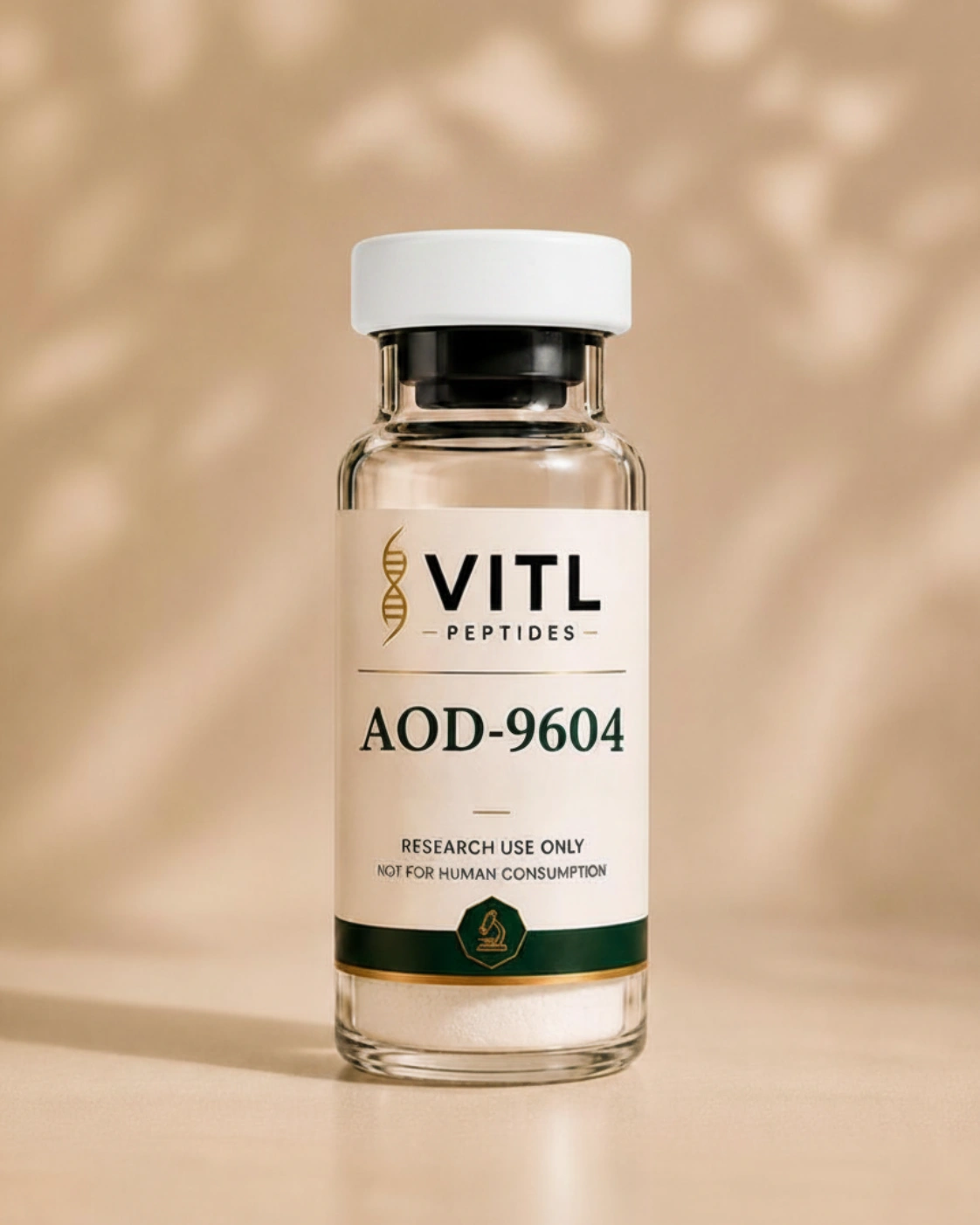
Choosing an AOD-9604 supplier requires careful review of product documentation, quality standards, storage practices, and business transparency. Researchers need reliable information about the materials they purchase so they can assess suitability for their intended laboratory work. A product description alone cannot establish identity, purity, or consistency. Vitl Peptides is a name researchers may encounter while reviewing peptide products, but every purchasing decision should be based on verifiable documentation and clearly stated research specifications. Taking time to examine these details can help laboratories compare suppliers fairly, identify missing information, and make more informed procurement decisions before placing an order.
Start With Product Information and Specifications
A supplier should provide clear, consistent information about the AOD-9604 product being offered. AOD-9604 is a synthetic peptide fragment associated with research into metabolism and fat-related biological processes. Its scientific interest does not automatically establish its effectiveness, safety, or suitability for a particular experiment.
Review the product listing for details such as:
- Product identity: Confirm that the listing specifically identifies AOD-9604.
- Declared quantity: Check the stated amount and packaging details.
- Purity specifications: Look for a clearly defined purity value and supporting analytical documentation.
- Storage information: Check whether handling and storage requirements are provided.
- Research limitations: Confirm that the supplier clearly describes the product’s intended research use.
Missing or contradictory information makes it harder to assess a product. Ask the supplier for clarification before relying on its specifications.
Examine Testing Reports Before Purchasing
Testing documentation can help researchers assess whether a peptide meets stated quality specifications. A certificate of analysis (COA) is one document worth reviewing, but its presence alone does not prove that a product is authentic or suitable for research. A useful report should identify the material tested, describe the analytical methods used, and present the results in a readable format. Where available, check the batch or lot number and confirm that it matches the product being considered.
Pay attention to these details:
- Testing method: Determine whether the reported method is appropriate for the property being measured.
- Purity results: Check how purity was assessed and whether the report explains the method.
- Identity confirmation: Look for evidence supporting the stated peptide identity.
- Report traceability: Check the date, sample identification, and laboratory details.
- Batch consistency: Establish whether the report relates to the specific batch offered for sale.
Methods such as high-performance liquid chromatography (HPLC) can help assess chromatographic purity, while mass spectrometry can support molecular identity assessment. Neither result should be treated as proof of every aspect of product quality.
Check the Supplier’s Quality Practices
Product documentation matters, but purchasing decisions should also consider how a supplier manages its operations. A dependable research peptide supplier should communicate clearly about quality checks, product handling, order records, and the limits of the information it provides. Look for practical evidence rather than broad marketing promises. Published quality procedures, traceable batch records, and responsive answers to technical questions offer more useful information than unsupported claims about being the best in the industry. Vitl Peptides can be included in a supplier comparison by reviewing its available product specifications and documentation against the same criteria applied to other vendors. Avoid assuming that a product meets a particular standard unless the relevant evidence is available.
Review Storage, Packaging, and Shipping Details
Peptide materials may be sensitive to environmental conditions, depending on their formulation and packaging. Poor handling during storage or transit can affect material quality, so researchers should understand the supplier’s stated procedures before ordering.
Check whether the supplier provides clear guidance on:
- Recommended storage conditions and any temperature requirements.
- Packaging designed to protect the material during transit.
- Shipping arrangements and expected delivery times.
- Procedures for reporting damaged, missing, or incorrectly supplied items.
- Available information about product handling before dispatch.
Do not assume that all peptides require identical storage conditions. Follow product-specific documentation and established laboratory procedures. If instructions are unclear, request written clarification before accepting or storing the material.
Assess Communication and Business Transparency
A supplier’s communication can reveal how well it supports informed purchasing decisions. Technical questions should receive clear answers, especially when they concern testing methods, batch identification, product specifications, or documentation availability. A credible supplier should explain what it can verify and acknowledge what it cannot establish. Be cautious of vague responses, exaggerated research claims, or promises that a peptide will produce particular biological outcomes.
When comparing a research peptide supplier, consider whether the business offers:
- Clear product descriptions without unsupported medical claims.
- Accessible contact and order-support information.
- Consistent product names and specifications across its materials.
- Written policies for shipping issues, returns, and order discrepancies.
- Documentation that can be reviewed before a purchasing decision.
These details help researchers distinguish verifiable information from promotional language.
Compare Value Without Focusing Only on Price
Price is relevant to procurement, but the lowest listed cost does not necessarily represent the best value. Differences in documented specifications, testing evidence, packaging, and order support may affect the overall suitability of a supplier. Create a simple comparison sheet that records the same information for every vendor. Include product quantity, available testing reports, batch traceability, shipping charges, storage guidance, and customer support. This makes differences easier to identify without relying on advertising claims. Vitl Peptides may be assessed using this process alongside other available suppliers. Base the comparison on evidence that can be checked, rather than assuming that a particular brand or product listing guarantees quality.
Keep Research Compliance in Focus
Before purchasing AOD-9604, confirm that the material and planned work comply with applicable laws, institutional policies, and laboratory requirements. Research-use labelling does not establish approval for human consumption, clinical treatment, or other unapproved applications. Researchers should also consider whether their study requires additional identity testing, independent analytical verification, or specific documentation under their laboratory’s quality procedures. Supplier information can support this review, but it does not replace independent scientific judgment. A careful evaluation process helps researchers document why a supplier was selected and identify unanswered questions before materials enter a study. Clear records also make future procurement reviews easier.
Make an Informed Supplier Decision
Evaluating an AOD-9604 supplier involves more than checking a product page or comparing prices. Documentation, analytical evidence, storage practices, communication, and research compliance all deserve attention. A consistent checklist helps laboratories assess vendors fairly and recognise when further verification is needed. Contact Vitl Peptides today to request available product specifications and relevant quality documentation for your research review. Verify all details independently and confirm that your planned work meets applicable laboratory and regulatory requirements before making a purchasing decision.